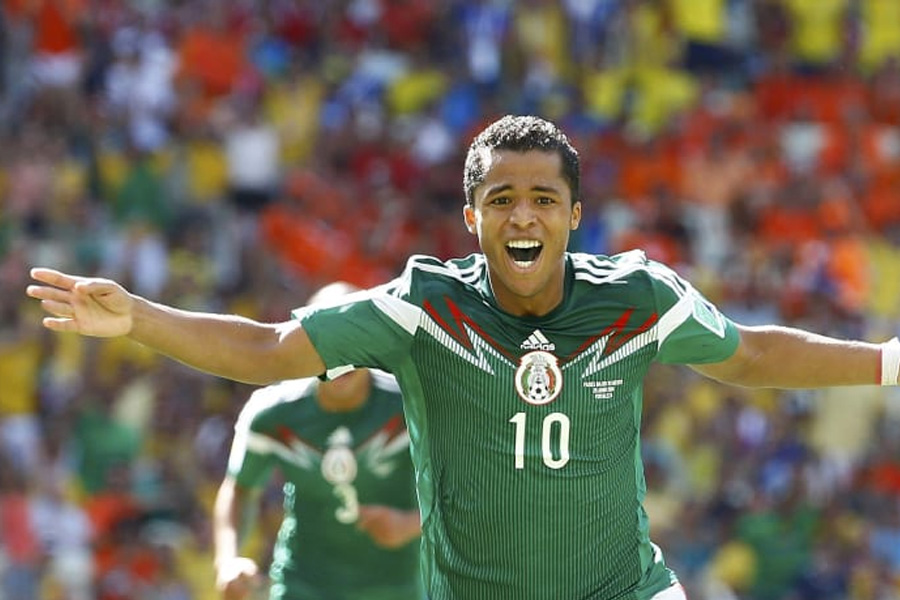
| Basic Information | Details |
|---|---|
| Full name | Giovani dos Santos Ramírez |
| Common name | Gio Dos Santos |
| Date of birth | 11 May 1989 |
| Place of birth | Monterrey, Nuevo León, Mexico |
| Nationality | Mexican |
| Position | Forward, attacking midfielder |
| Youth club | Barcelona academy |
| Senior clubs | Barcelona, Tottenham Hotspur, Ipswich Town, Galatasaray, Racing Santander, Mallorca, Villarreal, LA Galaxy, Club América |
| Major international honors | FIFA U-17 World Cup, Olympic gold medal, multiple Gold Cup titles |
| Family connection | Brother of Jonathan dos Santos |
A Rising Talent With a Loud Name
I assume Gio Dos Santos is a footballer whose name came before the story. A radiance surrounded him from the outset. He was born in Monterrey on 11 May 1989 into a football-based household. Former player Zizinho was his father, and his younger brother Jonathan dos Santos also played professionally. Gio entered a sport that frequently feels like a tunnel and shone.
His career began in Mexico, but Barcelona rapidly shaped his skills. His early development in the club’s academy might turn promising players into polished ones or leave them half-finished like a sculpture abandoned before the last stroke. Gio distinguished out for his touch, rhythm, and composure in tight situations. He was swift and more. He appeared fluent.
The Barcelona Dream and the Weight of Expectation
Barcelona was where the world began to treat him like a future star. He made his way into the senior setup and became part of a club that was already a machine for turning talent into trophies. For a young attacker, that stage can feel like playing chess on a moving train. Every touch matters. Every miss gets magnified. Gio’s Barcelona years gave him prestige, but they also created a standard he would spend much of his career chasing.
The expectations were enormous because his profile was enormous. He was a Mexican wonderkid at one of the biggest clubs in the world. That combination can be a blessing and a burden. In his case, it was both. He had quality, but the road from promise to permanence is steep, and football rarely hands out straight lines.
Clubs, Transfers, and the Search for the Right Fit
After Barcelona, Gio’s career moved through several clubs, each one a different test. Tottenham Hotspur was supposed to be the next major step, but the Premier League often acts like a storm for technical players who need time and space. He also had loan spells at Ipswich Town, Galatasaray, and Racing Santander. These stops gave him experience, but they also made his career feel like a train switching tracks too often.
Mallorca and Villarreal were more stable chapters. In Spain, he showed flashes of the attacker people had expected years earlier. Then came LA Galaxy, where he found a stage that suited him better. In Major League Soccer, he was not just another foreign name. He became a marquee player, someone expected to create, score, and carry a team’s rhythm.
I see his LA Galaxy spell as a kind of late bloom. It was not the same as the early Barcelona dream, but it had substance. He produced goals, assists, and memorable performances. It was the kind of run that reminded people why he had once been so highly rated. Later, he returned to Mexico with Club América, closing the loop in a career that had crossed continents and expectations.
Mexico and the Glory of International Football
If club football was uneven, international football gave Gio some of his sharpest triumphs. He was part of Mexico’s 2005 FIFA U-17 World Cup winning team, and that title remains one of the most important milestones in Mexican football history. He later won Olympic gold in 2012, a moment that still shines like a medal hanging in the sun. He also helped Mexico win the Gold Cup in 2009, 2011, and 2015.
These achievements matter because they show the scale of his impact. He was not only a club player with a famous name. He was part of some of the defining moments of Mexican football in the 21st century. That matters. Trophies at youth and senior international level are not background noise. They are the bells that mark a footballer’s true place in time.
Family Roots That Shaped the Story
Zizinho
Zizinho, Gio’s father, was more than a family name. He was a footballer who had already walked the path before his sons. That matters in a house where football is not a hobby but a language. A father like that can hand down more than genetics. He can hand down habits, instincts, and the belief that the pitch is not a dream but a workplace.
His passing in 2021 brought his role into sharper focus. The family’s grief became public, and the football world responded with sympathy. When I look at Gio’s story, I see Zizinho not only as a father but as the first architect of the sporting environment that shaped the brothers.
Liliana Ramírez
Liliana Ramírez, Gio’s mother, is less public, but her place in the family story is still essential. In many athlete families, one parent becomes the public face and the other becomes the structure behind the curtain. That does not make the quieter role smaller. Sometimes it is the foundation. She is part of the personal world that held the family together while the sons moved through academies, stadiums, and constant travel.
Jonathan dos Santos
Jonathan dos Santos is the family member most closely tied to Gio in public memory. He is his younger brother and also a professional footballer. Their careers crossed repeatedly, including at Barcelona, Villarreal, and with the Mexican national team. That kind of sibling overlap is rare and fascinating. It gives the family story an echo. One brother’s pass can feel like a continuation of the other’s path.
Jonathan has often been the more stable figure in club football, while Gio became the more mythic one. Together, they formed a footballing pair that people in Mexico and beyond followed closely. I think their bond helped both careers feel larger than themselves. They were not just brothers. They were mirrors.
Éder dos Santos
Éder dos Santos is another brother, older than Jonathan and part of the same football-rooted family. He did not reach the same level of fame as Giovani and Jonathan, but his presence matters in the family map. In football families, not every branch becomes a headline. Some branches simply prove how deep the roots go. Éder belongs to that broader family identity, one that made football part of daily life rather than a special occasion.
Career Reputation, Business Life, and Net Worth
Gio’s fame is divided between his playing and post-playing career. He was a talented attacker with big aspirations from a young age. He is reportedly involved in luxury-car and investment businesses off the pitch. He is claimed to be worth around $10 million, but such statistics are typically unreliable.
His financial story follows the trend of modern football stars leaving stadiums for private enterprise. He’s still around. He has merely entered a different field where judgments matter more than goals.
Recent Public Attention and Social Buzz
Recent attention around Gio has mostly been nostalgic. People revisit his World Cup moments, his youth brilliance, and the question of what might have been. Social media tends to preserve a player like him in fragments. A goal here. A dribble there. A photo from a big tournament. He remains vivid because his career touched so many different football worlds.
I think that is part of his lasting appeal. He was never just one thing. He was a prospect, a star, a brother, a son, an international champion, and a player whose career moved like weather across countries. Even now, his name still catches light.
FAQ
Who is Gio Dos Santos?
Gio Dos Santos is Giovani dos Santos Ramírez, a Mexican former footballer known for his time at Barcelona, Tottenham Hotspur, LA Galaxy, Club América, and the Mexico national team.
Who are Gio Dos Santos’s family members?
His most publicly known family members are his father Zizinho, his mother Liliana Ramírez, and his brothers Jonathan dos Santos and Éder dos Santos.
Is Jonathan dos Santos Gio Dos Santos’s brother?
Yes. Jonathan dos Santos is his younger brother, and both played professional football at a high level.
What are Gio Dos Santos’s biggest achievements?
His biggest achievements include winning the 2005 FIFA U-17 World Cup, Olympic gold in 2012, and multiple Gold Cup titles with Mexico.
What clubs did Gio Dos Santos play for?
He played for Barcelona, Tottenham Hotspur, Ipswich Town, Galatasaray, Racing Santander, Mallorca, Villarreal, LA Galaxy, and Club América.
What is Gio Dos Santos known for besides football?
He is also known for his famous family connections, public relationship history, and later business interests after his playing career.