Elsa Lancaster and the Making of a Singular Screen Legend
I see much more than Bride of Frankenstein’s Bride in Elsa Lancaster’s life. Rebellion, art, politics, and performance mold her from the start. She transitioned smoothly between theater, cinema, television, and cabaret over nearly 60 years as Elsa Lanchester. Her account illuminates radical houses, London stages, Hollywood soundstages, and the secret corners of a notoriously unique marriage during the 20th century.
She was born in Lewisham, London, in 1902 to unconventional parents. It publicly rejected it. That inheritance counted. She was reared in a dissenting home where politics, art, and social independence were the norm rather than the exception before becoming a famous character actor. I need that to comprehend her. Elsa was not odd by chance. Everyone breathed creative thought in her house.
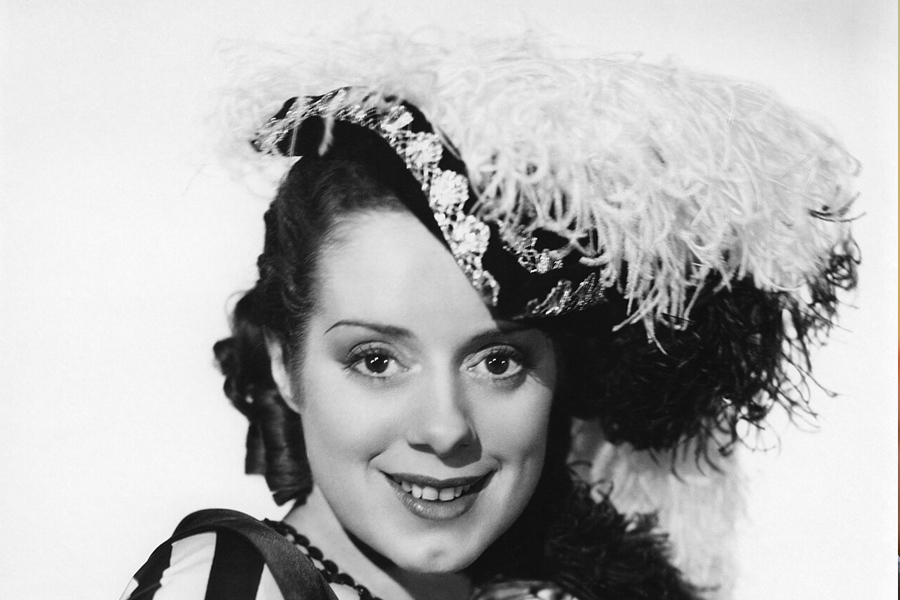
She was one of the most famous English-language supporting actors by 1986, when she died in Los Angeles at 83. She received two Academy Award nominations, participated in legendary films across genres, and left an image so famous that even people who have never seen Bride of Frankenstein recognize her silhouette.
A Family Built on Defiance
James Sullivan and Edith Lanchester, Elsa’s parents, designed a unique Edwardian residence. Irish socialist and labor campaigner James Sullivan was born in 1872. He was dedicated to political reform and opposed to institutions that perpetuated inequity. “Biddy,” Edith Lanchester, born in 1871, was similarly powerful. She was Eleanor Marx’s assistant and a socialist, feminist, and suffragette.
The fact that James and Edith never married makes their story stand out. Not a casual choice. A public rejection of legal and religious standards. Before Elsa was born, Edith’s family committed her to an asylum in 1895 because she wanted to live with James without marriage, causing a national scandal. The case caused uproar in Britain and revealed the stringent restrictions put on women who defied gender norms.
This upbringing helps explain Elsa’s eventual composure and independence. She was raised in a house where views had consequences, private life could become public theater, and adults distrusted conformity. The upbringing can be a furnace. It may forge creativity and harden a person. It appears to have done both for Elsa.
Edith Lanchester’s Lasting Influence
Of all the family members, Edith may have cast the longest shadow over Elsa’s inner life. She was not simply a political activist. She was a woman who had paid a personal price for living according to principle. That kind of example can stay with a child forever.
I see Elsa learning early on that women may be academically serious, socially assertive, and emotionally robust. Edith represented all three. For decades, she promoted socialist and feminist ideas, giving Elsa a unique paradigm of female freedom.
This matters because Elsa’s later public image, with its wit, unusual energy, and refusal to fit a narrow mold, did not arise in isolation. It had roots. Her mother’s life gave her a blueprint for survival in worlds that often punished women for being different.
Waldo Lanchester and the Artistic Atmosphere at Home
Waldo Lanchester, Elsa’s 1897-born older brother, added to the family’s creativity. He formed the Lanchester Marionettes and became one of Britain’s greatest puppeteers. His ceramicist wife, Muriel Lanchester, collaborated with him.
That information may seem little, but I think it shows something important about the family. The Lanchesters were not only politicians. It was creative. Performance, craft, design, and narrative were around. Waldo’s marionettes and theatrical illusions must have blurred art and life.
In a family like this, creativity was not a hobby. It was part of the family grammar. Elsa grew up hearing the language of performance before she fully entered it herself.
Early Life, Dance, and the Road to the Stage
Elsa liked movement before becoming a film actor. She studied dance and spent time in Paris with Isadora Duncan’s educational concepts as a child. That event gave her a more fluid view of art and the body. It reflected her unconventional background.
She taught dancing in England during WWI. That early training explains her subsequent physical intelligence, in my opinion. Elsa had dancer-like posture, rhythm, and facial control even in odd, funny, or supporting parts. She could evoke entire emotional worlds with a head tilt or silence.
In the 1920s, she tried cabaret and experimental theater. She fit these areas well. Cabaret values wit, timing, nerve, and character. Experimental theater honors risk-taking. Elsa had both. She sharpened her irreplaceable tools before Hollywood discovered her.
Meeting Charles Laughton and Building a Complex Partnership
In 1927, Elsa met Charles Laughton while both were working on the London stage. They married in 1929, and their relationship became one of the most discussed and enduring partnerships in classic film history. The marriage lasted until Laughton’s death in 1962, a span of 33 years.
Their marriage was considered unusual. Elsa subsequently admitted that their private life was unique, and biographers and historians have commonly called Laughton bisexual or homosexual. I notice durability, not controversy. The marriage survived because it seemed to be based on more than romance. Artistic appreciation, intellectual friendship, and aspiration were shared.
They collaborated on screen, strengthening their artistic partnership. Their 1950 citizenship marked another important life change as they settled into Hollywood and transatlantic stardom. No children likely kept their marriage focused on art, business, travel, and each other.
The British Screen Years and International Breakthrough
One of Elsa’s major early screen appearances came in The Private Life of Henry VIII in 1933, where she played Anne of Cleves opposite Charles Laughton. The film significantly raised their international profiles and helped open the path to larger opportunities.
This period matters because it shows Elsa in transition. She was no longer simply a stage performer with an eccentric spark. She was becoming a screen presence. Film can flatten some actors, but with Elsa it did the opposite. The camera found her expressive oddity and turned it into power.
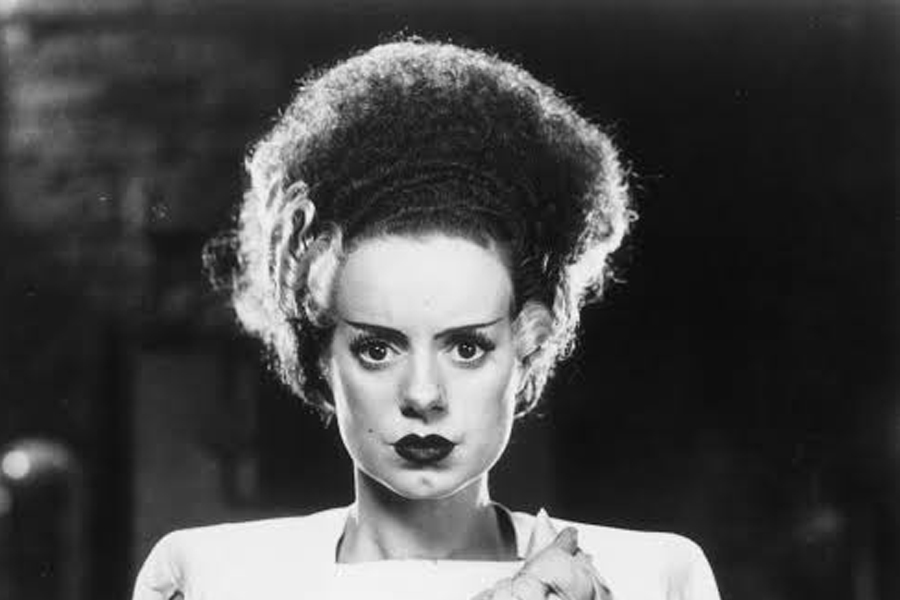
The Bride in Bride of Frankenstein debuted in 1935. The quick performance is remembered like lightning in a dark sky. Her frightened gaze, tight body language, and electrifying visual design made a brief cameo one of horror cinema’s most memorable. The role outgrew its screen time, a sign of mythmaking.
Hollywood, Range, and Longevity
What I admire most about Elsa’s career is that she was never trapped by her most famous role. Many actors would have remained permanently pinned to a single iconic image. Elsa kept moving. She worked in drama, comedy, suspense, family films, and television.
Hollywood and subsequent films included David Copperfield, Rembrandt, The Spiral Staircase, The Bishop’s Wife, The Big Clock, Witness for the Prosecution, Mary Poppins, and That Darn Cat!willard, Blackbeard’s ghost, and murder by death. That range amazes. It displays adaptability and stamina.
She received two Oscar nominations for Best Supporting Actress. First for Come to the Stable in 1949. 1957’s Witness for the Prosecution was the second. These nominations affirmed what fans and directors already knew: Elsa was one of the era’s important character performers, not a novelty act or cult figure.
Memoirs, Money, and Late Recognition
Elsa also became an author, publishing memoirs such as Charles Laughton and I and Elsa Lanchester Herself. These works added another layer to her public identity. She was not just remembered by others. She helped tell her own story.
Financially, lifetime figures are questionable, although 1986 documents showed her estate was worth roughly $900,000. That would be many million dollars now. The profile shows a strong and prolonged career, not a studio-era empire.
Researchers discovered her cremated bones at Valhalla Memorial Park Cemetery under the name Elsa Lanchester Laughton in 2025, a shocking development. Many thought her ashes were in the Pacific Ocean for years. The finding of her burial site adds to her mythology.
Timeline at a Glance
| Year | Event |
|---|---|
| 1902 | Born in Lewisham, London |
| 1910s | Studies dance and absorbs Duncan-inspired ideas |
| 1920s | Performs in cabaret and experimental theater |
| 1927 | Meets Charles Laughton |
| 1929 | Marries Charles Laughton |
| 1933 | Appears in The Private Life of Henry VIII |
| 1935 | Plays the Bride in Bride of Frankenstein |
| 1949 | Receives first Academy Award nomination |
| 1950 | Becomes a United States citizen |
| 1957 | Receives second Academy Award nomination |
| 1962 | Charles Laughton dies |
| 1964 | Appears in Mary Poppins |
| 1976 | Appears in Murder by Death |
| 1984 | Publishes autobiography |
| 1986 | Dies in Los Angeles |
| 2025 | Burial site publicly commemorated |
FAQ
Who were Elsa Lancaster’s parents?
James Sullivan and Edith Lanchester raised Elsa Lancaster. James was an Irish socialist and labor leader, while Edith was a feminist, suffragette, and Eleanor Marx’s secretary. Elsa’s temperament and views were impacted by their unique upbringing.
Was Elsa Lancaster really married to Charles Laughton?
Yes, she married Charles Laughton in 1929, and they remained married until his death in 1962. Their marriage was widely seen as unconventional, but it was also intellectually rich and artistically productive.
Did Elsa Lancaster have children?
No, Elsa Lanchester and Charles Laughton had no children. Their life together was centered largely on performance, writing, travel, and creative partnership.
Why is she so famous for Bride of Frankenstein?
She is famous for that role because the Bride’s appearance, movement, makeup, and shock-filled expression created one of the most iconic images in horror film history. Even though the role is brief, it achieved a mythic status that few performances ever reach.
Who was Waldo Lanchester?
Waldo Lanchester was Elsa’s older brother. He became a major British puppeteer and founded the Lanchester Marionettes. His career reflects the broader artistic energy of the family.
What were Elsa Lancaster’s biggest career achievements?
Her biggest achievements include a screen career spanning nearly six decades, two Academy Award nominations, and a body of work that crossed horror, comedy, drama, television, and family entertainment. She also became a respected memoirist in later life.
Did Elsa Lancaster write books?
Yes, she wrote memoirs including Charles Laughton and I and Elsa Lanchester Herself. These books helped preserve her memories of stage life, film history, and her marriage.
What made her family unusual?
Her family openly challenged conventional ideas about marriage, religion, gender roles, and politics. Her parents’ refusal to marry, Edith’s 1895 asylum scandal, and the family’s deep ties to socialist and artistic circles made their story highly unusual for the time.