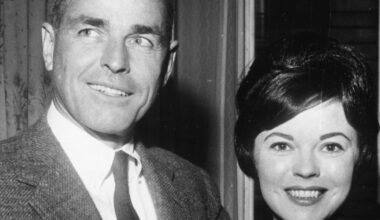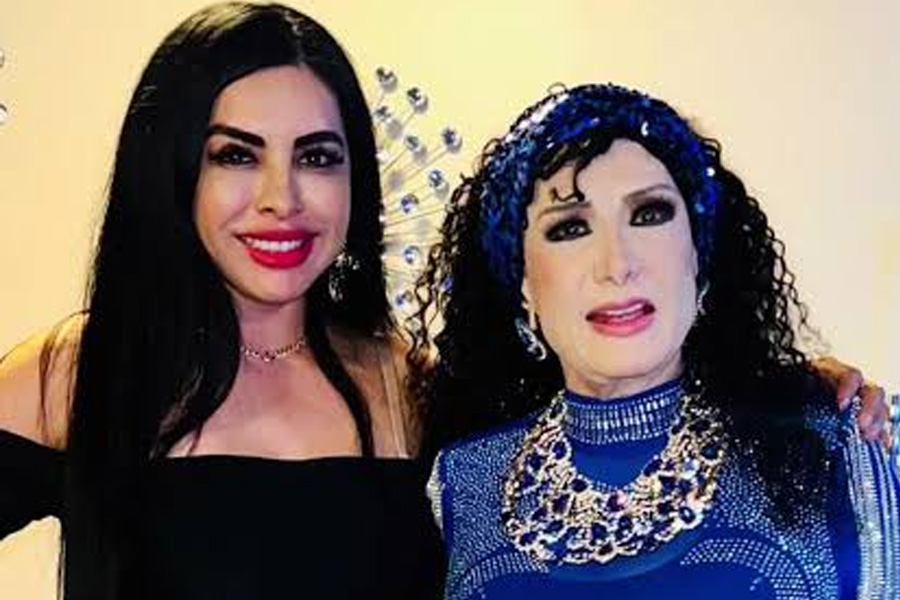
Her life has included family separation, a painful personal tragedy, early motherhood, and the challenge of entering an industry where her father’s name already carries enormous weight. Rather than relying entirely on that connection, Beatriz has pursued her own musical projects while maintaining strong ties to her Mexican heritage.
Her journey resembles a song with several movements. There is the influence of her parents, the silence created by years of separation, the determination to raise her children, and the steady effort to build a career on her own terms.
Beatriz Adriana Solis Basic Information
| Category | Details |
|---|---|
| Full name | Beatriz Adriana Solís |
| Other names | Beatriz Solís, Betty Solís, Chiquilla Bonita |
| Date of birth | May 10, 1989 |
| Birthplace | Corona, California, United States |
| Nationality | Mexican American |
| Profession | Singer, performer, entrepreneur, wellness coach |
| Music genres | Regional Mexican, ranchera, mariachi, romantic music |
| Mother | Beatriz Adriana Flores de Saracho |
| Father | Marco Antonio Solís |
| Maternal half-brother | Leonardo Martínez |
| Paternal half-sisters | Marla Solís and Alison Solís |
| Children | Leonardo and Leah |
| Known album | Mi Nueva Historia |
| Main residence | Southern California |
Beatriz turned 37 in May 2026. Although her family connections have attracted considerable attention, she has developed several professional interests beyond music. Her work in fitness, nutrition, and entrepreneurship reflects a practical side of her personality that does not always appear in entertainment headlines.
Growing Up Between Two Musical Worlds
Music was more than a career in Beatriz’s family. It was a daily language for expressing love, disappointment, ambition, and identity.
Her mother Beatriz Adriana was a successful ranchera and mariachi performer. Marco Antonio Solís, her father, was on the path to becoming a prominent Latin music singer-songwriter.
The marriage between her parents ended. Their 1983 marriage ended many years later, leaving Beatriz to grow up with her mother. They split due to professional and personal issues, and the family’s public history reflected it.
A child with renowned parents may not have an easy childhood. Beatriz’s childhood was shaped by her parents’ estrangement and her mother’s struggles.
She spent more time in the US so she could focus on her daughter’s stability. Beatriz grew up in Southern California with Mexican and American culture.
Her music would reflect that blend. She inherited Mexican popular music but worked in a modern entertainment context shaped by streaming platforms, social media, and consumers on both sides of the border.
Beatriz Adriana Her Mother and Closest Musical Influence
A mother daughter relationship rooted in music and shared experience
Beatriz Adriana Flores de Saracho, professionally known as Beatriz Adriana, was born on March 5, 1955, in Navojoa, Sonora, Mexico. She became known for her powerful voice and contributions to ranchera and mariachi music, as well as her appearances in Mexican films.
Her career began when she was young, and she went on to establish herself through recordings, live performances, and screen appearances. Her stage presence and distinctive vocal style helped make her a recognizable figure in Mexican entertainment.
For Beatriz Solís, her mother represented both a family anchor and a professional example. She grew up watching a woman navigate the pressures of performing while carrying the responsibilities of motherhood.
The two share a noticeable physical resemblance, something fans have frequently commented on. Their connection also extends to the stage, where they have performed together and celebrated their shared musical heritage.
Their relationship has not been defined solely by celebrity. It has also been shaped by difficult family experiences, including the loss of Beatriz Adriana’s son Leonardo. Through those experiences, the mother and daughter have remained closely connected.
In 2025, Beatriz Solís publicly expressed appreciation for sharing the stage with her mother during special performances associated with Chelo’s farewell events. Moments like these demonstrate how family relationships can become part of a musical legacy without either generation losing its individual identity.
Marco Antonio Solís and a Complicated Father Daughter History
Marco Antonio Solís, born in 1959 in Ario de Rosales, Michoacán, Mexico, is one of the most influential songwriters and performers in modern Latin music. Known as El Buki, he first became widely recognized as the lead singer and principal songwriter of Los Bukis before achieving major success as a solo artist.
His compositions frequently explore heartbreak, longing, regret, and romantic devotion. Songs such as “Tu Cárcel,” “Si No Te Hubieras Ido,” and “La Venia Bendita” have reached audiences across generations.
Yet his relationship with Beatriz Solís developed along a different path from his professional achievements.
Following his separation from Beatriz Adriana, contact between father and daughter was limited for many years. Her mother publicly described him as largely absent during Beatriz’s upbringing, while accounts of the family history have also discussed disagreements surrounding the marriage and its aftermath.
Around 2010, Beatriz and her father began a public reconciliation. Their relationship subsequently improved, and she attended his concerts and appeared with him at family and musical events.
One of the most meaningful connections between them is the song “Chiquilla Bonita,” which is associated with Beatriz and reflects the personal side of her father’s songwriting. The nickname has also become part of her public identity.
Marco Antonio Solís’s wider influence provides an interesting context for his daughter’s career. His songs have been recorded by numerous artists, adapted across musical styles, and introduced to younger listeners through new interpretations. His legacy is therefore not confined to his own performances.
For Beatriz, the challenge has been to honor that legacy while making room for her own voice. Reconciliation gave them an opportunity to rebuild their relationship, but it did not erase the years that came before it.
Her Paternal Half Sisters Marla and Alison Solís
Through her father, Beatriz has two half-sisters, Marla Solís and Alison Solís, from his marriage to Cristy Salas, also known as Cristy Solís.
Both sisters belong to the younger generation of the Solís family and have grown up with a connection to their father’s music and public recognition. Beatriz’s relationship with them adds another dimension to her family story.
Blended families can take time to establish their own rhythms, especially when separation and distance have shaped earlier relationships. In Beatriz’s case, her improved relationship with her father has accompanied a more positive connection with her paternal relatives.
She has maintained friendly family ties while continuing to pursue her own projects. The relationship demonstrates that family history does not have to remain fixed in the circumstances of an earlier generation.
Cristy Salas also forms part of this extended family network as Marco Antonio Solís’s wife. Beatriz’s continued connection with her father’s household reflects the possibility of building relationships beyond the original marriage.
Leonardo Martínez and a Family Tragedy That Changed Everything
One of the most painful chapters in Beatriz’s family history concerns Leonardo Martínez, her maternal half-brother.
Leonardo was born from Beatriz Adriana’s earlier relationship and was not the biological son of Marco Antonio Solís. He was reportedly 21 years old when he was kidnapped and murdered in Tijuana in July 2000, along with a friend identified in accounts of the case as Aquiles Bergis or Veljiz.
The reported circumstances involved an alleged debt connected to the friend. A ransom demand of approximately $800,000 was described in accounts of the tragedy, but the situation ended in devastating loss.
Leonardo’s death deeply affected Beatriz Adriana and the wider family. The tragedy contributed to her mother’s decision to establish a more permanent life in the United States, where she sought greater security.
For Beatriz Solís, the loss was part of a family history marked by grief at a young age. The experience also illustrates how public attention often captures only a fraction of what a family endures privately.
The story of Leonardo remains significant because it connects the family’s public narrative to something much more personal than music or celebrity. His life and death formed part of the emotional landscape in which Beatriz and her mother continued to build their lives.
Her Maternal Grandparents and Family Roots
Beatriz’s maternal grandparents were Casimiro Flores and Aída de Saracho. Through her mother’s side of the family, she is connected to the cultural traditions and family history associated with Sonora and the wider Mexican musical world.
Her paternal grandparents were Antonio Solís Marroquín and María Elena Sosa de Solís, the parents of Marco Antonio Solís.
These family connections help place Beatriz within two distinct but overlapping branches of her heritage. Her mother’s professional background is strongly associated with ranchera and mariachi traditions, while her father’s career spans grupero music, romantic ballads, and Latin pop.
The influence of both sides can be seen in the musical environment in which she grew up. Family gatherings and early exposure to performance gave her opportunities to develop an appreciation for singing long before she pursued it professionally.
Although detailed public information about her grandparents remains limited, their place in the family tree connects her to the generations that preceded her parents’ success.
Beatriz Solís as a Young Mother
Beatriz’s life changed after motherhood. Leonardo, her first kid, was born around 2007 or 2008, when she was 18.
While discovering her path as an adult, she had to raise a child. Before pursuing a singing career, she worked waitressing and cosmetics.
She said singing at karaoke and restaurant parties led to paid performances. Those early experiences helped her transition from informal to professional singing.
In 2017 or 2018, she had her second daughter, Leah. Beatriz says her children are her greatest inspiration, underlining the significance of family stability.
Her five-year marriage to Leonardo’s biological father ended. Billy, Leah’s father, was her longtime partner. He reportedly raised both children.
Beatriz has also highlighted pregnancy and recovery issues like epidural anesthesia and fitness.
Her personal and professional objectives are impacted by motherhood. Her children are more than a biographical detail. She defines her goals and future with them.
Building a Career in Regional Mexican Music
Beatriz began singing during childhood, taking part in family gatherings and school events from around the age of six. Growing up with two professional singers as parents gave her early exposure to music, but a family background could not substitute for the work required to establish her own career.
Her more serious professional efforts developed during her late teens and early adulthood. After working outside the entertainment industry, she began accepting singing opportunities and gradually built a repertoire that included ranchera, mariachi, banda influences, and romantic Mexican classics.
Her 2019 album Mi Nueva Historia marked an important point in her recorded career. The title itself carries an appealing sense of renewal, suggesting an artist moving beyond the expectations attached to her upbringing.
The project helped introduce her music to listeners through digital platforms. Its title track, associated with her father’s songwriting, also illustrated the relationship between family heritage and her individual ambitions.
Other songs associated with her catalog include:
-
“Me Quedé Vacía”
-
“A Mí Me Ha Pasado”
-
“Vete Vete”
-
“Lo Mejor Para Los Dos”
-
“Llévame”
-
“Pero Te Vas a Arrepentir,” a collaboration with Los Yonic’s
-
“La Basurita”
These recordings demonstrate her interest in the emotional themes that have long shaped regional Mexican music. Love, disappointment, separation, and perseverance provide a natural bridge between the traditional repertoire and the experiences of contemporary listeners.
Her work also exists within a competitive industry where digital visibility can be as important as traditional radio exposure. Streaming services have given independent performers new ways to reach audiences, while social media allows artists to promote songs, announce shows, and communicate directly with fans.
Beatriz has continued releasing music and performing during the 2020s, developing her own following rather than depending exclusively on her parents’ audiences.
Marco Antonio Solís and the Songwriting Legacy Behind Her Music
To understand Beatriz’s musical background, it helps to look more closely at her father’s songwriting influence.
Marco Antonio Solís became the principal creative force behind Los Bukis during the group’s rise in the 1980s and early 1990s. After beginning his solo career in 1996, he continued writing and performing songs that connected traditional regional Mexican sounds with romantic Latin pop.
His compositions have reached listeners through his own recordings and through interpretations by other artists. “Si No Te Hubieras Ido,” “Tu Cárcel,” and “Como Tu Mujer” are examples of songs that have acquired lives beyond a single performance or recording.
His songwriting often uses straightforward language to express complicated emotions. This quality makes his music accessible to listeners who recognize their own experiences in its stories of love and regret.
For Beatriz, that musical inheritance provides both an advantage and a challenge. Familiarity with the traditions, performance expectations, and emotional vocabulary of Mexican popular music can help an emerging singer understand her audience. At the same time, listeners may compare her work with her father’s enormous catalog.
Her approach has involved interpreting regional Mexican music through her own performances while acknowledging the family connections that helped shape her early life.
Fitness, Nutrition, and Entrepreneurial Projects
Music is only one part of Beatriz’s professional identity. She has also pursued fitness and wellness, including nutrition-related training, coaching, and Zumba instruction.
Her interest in physical fitness has been discussed alongside her experiences with pregnancy and recovery. She has shared aspects of her fitness journey on social media, where personal transformation and exercise routines have become part of her public image.
Operating a Zumba studio and exploring other business activities have allowed her to develop professional interests outside the recording studio. She has also been associated with cosmetics and related entrepreneurial ventures.
These activities offer a different perspective on her career. Live music and recording can be unpredictable sources of income, particularly for independent performers who do not have the commercial reach of major international stars. Building several professional interests can create additional opportunities and help support a family.
Her public identity consequently combines several roles: singer, businesswoman, mother, and wellness advocate. Each requires a different set of skills, from stage performance and audience engagement to business management and personal discipline.
Beatriz Solís Net Worth and Sources of Income
Beatriz Solís’s exact net worth has not been reliably established. Some online estimates place her wealth at approximately $5 million, but such figures should not be treated as verified financial information.
Her potential income streams include music streaming, live performances, event appearances, collaborations, social media promotions, fitness coaching, and business activities.
Streaming platforms provide ongoing exposure, although the number of plays alone does not reveal how much an artist earns. Revenue depends on factors such as recording rights, distribution agreements, platform payments, and the division of income among the parties involved.
Her father’s financial position is a separate matter. Marco Antonio Solís has enjoyed decades of major commercial success through songwriting, recording, touring, and production. His accomplishments do not establish the value of his daughter’s assets or prove that she receives a particular level of financial support.
Beatriz’s career is better understood as an independent professional undertaking with several sources of potential revenue. Publicly available information does not provide a complete picture of her business ownership, expenses, investments, or earnings.
Social Media and Her Relationship With Fans
Social media is crucial to Beatriz’s audience engagement. Her Instagram account is @beatrizasolis, and she posts music and fitness stuff on Facebook.
Professional updates, family life, personal achievements, exercise, and Mexican cultural pride are common in her posts. This combination lets fans see an artist offstage and promotes performances and new releases.
Entertainment media has often compared her to her mother and recalled her father. These topics draw attention because they link her to two Latin music icons.
Her work remains crucial to the plot. Her records, live appearances, wellness programs, and business operations show her interests outside her family’s fame.
Her online presence mirrors music business changes. Artists can now connect with listeners without record labels, radio stations, or TV appearances. Building an audience on social media takes regular effort, but it can be a direct avenue for communication and advertising.
Frequently Asked Questions About Beatriz Adriana Solis
Who is Beatriz Adriana Solis?
Beatriz Adriana Solis, also known as Beatriz Solís or Betty Solís, is a Mexican American singer, performer, entrepreneur, and wellness professional. She is the daughter of Mexican singers Beatriz Adriana and Marco Antonio Solís.
How old is Beatriz Adriana Solis?
She was born on May 10, 1989. She turned 37 in May 2026.
Who are Beatriz Solís’s parents?
Her mother is Beatriz Adriana Flores de Saracho, a Mexican ranchera singer and actress. Her father is Marco Antonio Solís, the acclaimed singer-songwriter known for his work with Los Bukis and his successful solo career.
Does Beatriz Solis have siblings?
Yes. Her maternal half-brother was Leonardo Martínez, who died in a kidnapping and murder in Tijuana in July 2000. Through her father, she has two half-sisters, Marla Solís and Alison Solís.
How many children does Beatriz Solis have?
She has two children, a son named Leonardo and a daughter named Leah. She has described motherhood as a major source of motivation in her life.
What songs and albums is Beatriz Solis known for?
Her music includes the 2019 album Mi Nueva Historia and songs such as “Me Quedé Vacía,” “A Mí Me Ha Pasado,” “Vete Vete,” “Llévame,” and “La Basurita.” Her repertoire draws heavily on regional Mexican music and romantic themes.
Is Beatriz Solis close to her father Marco Antonio Solis?
Their relationship was distant for many years following her parents’ separation. They began reconciling publicly around 2010, and their relationship subsequently improved. She has attended his concerts and appeared with him at family and musical events.
What does Beatriz Solis do besides singing?
She has pursued fitness and wellness work, including nutrition-related training, Zumba instruction, and coaching. She has also been associated with business ventures and social media promotions.
What is Beatriz Solis’s net worth?
Her exact net worth is unknown. Estimates circulating online, including figures around $5 million, are unverified. Her potential income sources include music, performances, promotional work, fitness services, and business activities.
Where does Beatriz Adriana Solis live?
She has been associated with Corona and the wider Southern California area. She maintains a relatively private home life while continuing her music, business, and wellness activities.
What is the meaning of the nickname Chiquilla Bonita?
Chiquilla Bonita is a nickname associated with Beatriz Solís and a song connected to her father, Marco Antonio Solís. It reflects the personal connection between her family history and her father’s songwriting legacy.