Who Jacob Fiennes Is
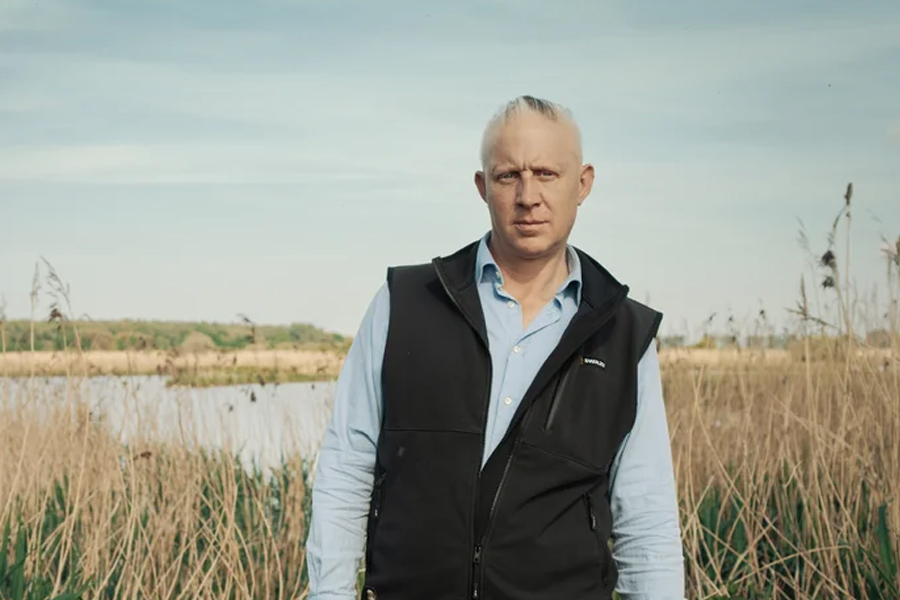
I picture the Fiennes family as a constellation of culturally significant actors, directors, singers, and authors. Yet Jacob Mark Twisleton-Wykeham-Fiennes, known as Jake Fiennes, excels in a different sector. Born in 1970, he spent his life amid fields, woodlands, marshes, and working estates.
Conservationist, countryside manager, estate manager, and novelist Jacob is British. He has studied ways to make farmland profitable while reintroducing animals, one of the biggest challenges in modern rural living. In a performing and creative family, he worked with earth. Instead of scripts, cameras, or music, he used hedgerows, habitat corridors, bird populations, and the land’s tolerance.
That contrast intrigues me. While not the loudest family member, his job is stable. He has become a renowned voice in British conservation over the last few decades because he talks from experience. Years of managing actual landscapes under real economic constraints give him authority.
A Childhood in an Unusual Family
Jacob was born into a creative, unique family. Photographer Mark Fiennes and novelist Jennifer Lash raised seven children. The home fostered creativity, discipline, and uniqueness. It produced actors, directors, and a land-loving conservationist.
In the 1970s and 1980s, Jacob lived among siblings who would become British cultural icons. The family milieu must have been remarkable, with strong personalities and vast ambition mixed with art, storytelling, and intellectual curiosity. However, Jacob’s path changed. He chose a gentler world of seasons, species, and stewardship over public performance.
He intrigues with his distinctiveness. Many prominent families have a repeated pattern, as if everyone is the same. In the Fiennes family, fabric is shared yet clothes are very diverse. Jacob’s career illustrates that ancestry may be expressed via art and action.
His Parents and Their Influence
Mark Fiennes
Mark Fiennes, Jacob’s father, died in 2004. He was an English photographer and artist recognized for architectural photography and documenting historic structures and collections. His work took patience, observation, and organization and detail.
I can see how a parent like him would influence a conservationist son. Photography helps you see light on stone, landscape pattern, and place’s silent drama. Conserving takes similar discipline. One must notice slow change. One must learn land’s character throughout time.
Jennifer Lash
Jen Lash, Jacob’s mother, was born 1938 and died 1993. She was innovative as a novelist and painter. Her writing enhanced the family’s intellectual and creative atmosphere. She was a serious literary figure, and her breast cancer death at 55 devastated the family.
Her effect seems significant despite Jacob’s nonliterary career. Writers educate families to think deeply, probe behind surfaces, and respect complexity. Conservation depends on that mindset too. Landscapes are never backdrops. The writing is alive with relationships, forces, memory, and consequence.
The Famous Siblings Around Him
Jacob belongs to one of Britain’s best-known families, and his siblings are central to that story.
Ralph Fiennes
Ralph Fiennes is the most internationally recognized of the siblings. His performances in films such as Schindler’s List, the Harry Potter series, and the James Bond franchise made him one of Britain’s most acclaimed actors. He built a career marked by range, intensity, and classical precision.
When I place Jacob beside Ralph, the contrast is vivid. One commands attention in cinemas across the world. The other works in landscapes where success may be measured by the return of birdsong or the revival of insects in a field margin. Both careers, however, demand mastery.
Joseph Fiennes
Joseph Fiennes also became a major actor, known for Shakespeare in Love, Elizabeth, and The Handmaid’s Tale. His long screen career strengthened the image of the Fiennes family as a powerhouse of artistic talent.
Martha Fiennes
Martha Fiennes developed a career as a director, producer, and screenwriter. Her work is known for visual ambition and an interest in experimental forms. She took the family’s creative inheritance into filmmaking with a style all her own.
Sophie Fiennes
Sophie Fiennes became an acclaimed documentary filmmaker. Her work often explores art, philosophy, and culture, bringing an intellectual edge to nonfiction cinema.
Magnus Fiennes
Magnus Fiennes made his name in music as a composer, producer, and musician. His work spans multiple forms, including film and television music.
Michael Emery
Michael Emery, raised as a foster son in the household, is often counted within the wider sibling circle. He later became an archaeologist, another path rooted in inquiry and the careful study of the past.
Taken together, the siblings form an extraordinary group. Jacob’s place among them is distinctive not because he is less accomplished, but because he chose a field where fame is less flashy and impact can be more quietly profound.
Marriage and Children
In 1999, Jacob married Melanie Plaice. Public information regarding their relationship are minimal, reflecting his surrounding secrecy. Jacob’s personal life has been mostly hidden from the public eye, unlike other Fiennes family members.
The couple have two children. Their daughter, Teale Isabella Twisleton-Wykeham-Fiennes, was born on 24 July 2000. Their son, Nathaniel Twisleton-Wykeham-Fiennes, was born on 17 July 2002. Like their parents, both have maintained a relatively private profile.
I think that privacy is telling. It suggests a life built more on substance than display, more rooted than broadcast. In an age when visibility is often mistaken for achievement, that restraint feels almost old-fashioned in the best sense.
A Career Rooted in the Land
Jacob’s professional life began with practical countryside work, including experience as a gamekeeper and rural manager. One early position connected him with the Raveningham Hall estate in Norfolk. That kind of work is hands-on, demanding, and deeply tied to the rhythms of place.
Not abstract environmentalism. Fieldwork, animal management, estate knowledge, and long-term observation. Early years laid the groundwork for his main message: conservation must function in the real world. Budgets, weather, agricultural needs, and land use conflicts must be overcome.
Jacob became one of Britain’s top estate conservation managers. He studied habitat restoration, farmland biodiversity, wildlife rehabilitation, and sustainable agriculture. Farming and conservation are not incompatible, he said. Intelligent land management may make them partners, he believes.
That concept counts. Too often, environmental conversations become trench warfare. Nature versus productive land. The Jacob method provides another image. He views the countryside as a fabric rather than a battlefield. Carelessly pulling a thread undermines everything. Balance the cloth, and it holds.
Why His Conservation Work Matters
In the 2000s, 2010s, and into the 2020s, Jacob’s reputation grew because he represented a practical model of environmental repair. He did not simply advocate broad ideals. He focused on measurable ecological improvement on working estates.
His areas of emphasis have included:
| Area | Focus |
|---|---|
| Habitat restoration | Rebuilding conditions for wildlife to thrive |
| Farmland biodiversity | Supporting birds, insects, and plant variety |
| Sustainable agriculture | Maintaining productivity with ecological awareness |
| Rural stewardship | Managing estates for long-term environmental health |
| Species recovery | Helping restore declining wildlife populations |
I like this concept because it appeals to conservation skeptics. When the case is practical, economically aware, and field-tested, farmers, estate owners, and land managers will listen. That practicality lends Jacob credibility.
He has also emerged as a public advocate through speaking, writing, and participation in conservation discussions. His work helps shape wider debates on biodiversity loss, agricultural reform, and the future of the British countryside.
The Broader Fiennes Family Legacy
The Fiennes family has long been associated with old English lineage and a distinctive aristocratic heritage. The full surname, Twisleton-Wykeham-Fiennes, carries that history in its very cadence. It sounds like a corridor opening into centuries of ancestry.
However, how family members have embodied it fascinates me more than pedigree. Some became global entertainers. Some studied music or documentaries. Jacob worked in estate management and ecological restoration, which relates to land and inheritance.
This gives his story an added dimension. He is not merely a conservation professional. He is also part of a family whose history and identity are deeply tied to British cultural and historical landscapes. That makes his work feel especially resonant.
A Timeline of Jacob Fiennes’ Life
| Year | Event |
|---|---|
| 1970 | Jacob Mark Twisleton-Wykeham-Fiennes is born |
| 1970s | Raised within the Fiennes family environment |
| 1980s | Grows up alongside siblings who later enter public cultural life |
| 1993 | His mother, Jennifer Lash, dies |
| 1990s | Works in countryside and gamekeeping management |
| 1999 | Marries Melanie Plaice |
| 2000 | Daughter Teale Isabella is born |
| 2002 | Son Nathaniel is born |
| 2004 | His father, Mark Fiennes, dies |
| 2000s | Expands his estate management and conservation work |
| 2010s | Gains wider recognition as a conservation specialist |
| 2020s | Becomes a prominent advocate for biodiversity restoration |
Public Profile and Personal Style
Unlike Ralph or Joseph, Jacob does not occupy the celebrity lane. His public profile is lower, more specialized, and more anchored in professional respect than mass recognition. I think that suits his role. Conservation often works best when it is patient, unglamorous, and sustained over years.
His image is also refreshing. He is the non-entertainment Fiennes sibling who staged the countryside and studied wildlife. He is like the root system in a family tree with dramatic branches: hidden yet vital and strong.
FAQ
Who is Jacob Fiennes?
What is Jacob Fiennes known for?
Jacob Fiennes is known for his work as a British conservationist, countryside manager, estate manager, and author. He is especially associated with habitat restoration, farmland biodiversity, and practical environmental management on working estates.
Is Jacob Fiennes related to Ralph Fiennes?
Yes, Jacob Fiennes is Ralph Fiennes’ brother. He is also the brother of Joseph Fiennes, Martha Fiennes, Sophie Fiennes, and Magnus Fiennes.
What is Jacob Fiennes’ full name?
His full name is Jacob Mark Twisleton-Wykeham-Fiennes.
Family Background
Who were Jacob Fiennes’ parents?
His parents were Mark Fiennes, a photographer and illustrator, and Jennifer Lash, a novelist and painter.
Is Jacob Fiennes married?
Yes, he married Melanie Plaice in 1999.
Does Jacob Fiennes have children?
Yes, he has two children: Teale Isabella Twisleton-Wykeham-Fiennes, born in 2000, and Nathaniel Twisleton-Wykeham-Fiennes, born in 2002.
Career and Work
What does Jacob Fiennes do?
He works in conservation and land management. His career has included gamekeeping, countryside management, estate management, public advocacy, and environmental writing.
Why is Jacob Fiennes important in conservation?
He is important because he promotes a practical model in which productive farming and wildlife conservation can coexist. His work has helped shape conversations around biodiversity recovery and sustainable rural management.
Is Jacob Fiennes an actor like his siblings?
No, Jacob did not pursue acting or filmmaking as a career. He took a different path and became known for his work in conservation and countryside stewardship.